
Understanding the Role of a CNC Turner
The CNC Turner, often unrecognized by the general public, plays a crucial role in numerous industries, including aerospace, automotive, medicine, and many others. These highly skilled machining professionals master the art of manipulating Computer Numerical Control (CNC) machines to shape precision components in large quantities. In the aerospace industry, they craft intricate components for aircraft engines, ensuring optimal performance and safety. In the medical field, they are responsible for producing complex medical devices and implants that change lives. The CNC Turner's work combines craftsmanship with cutting-edge technology, contributing to the success of vital sectors of the economy.
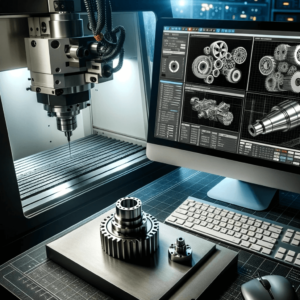
The heart of the CNC Turner's trade lies in machine programming. Using cutting-edge software, these modern artisans create specific programs that dictate the movements and turning operations performed by the machine. Raw materials, often composed of expensive and intricate substances such as titanium and high-strength alloys, undergo a meticulous cutting and shaping process to achieve the desired form. These materials are known for their challenging properties, making the CNC Turner's precision and expertise even more critical. Achieving the exact specifications required for each project is a testament to their skill and attention to detail.

Pursuit of Perfection
The primary mission of a CNC Turner is to ensure the production of the highest-quality components while adhering to the specifications of each project. This requires meticulous attention to detail, as even the slightest error can lead to a significant deviation from the required quality standards. CNC Turners consistently seek perfection in their work. They meticulously inspect each component, using precision measuring tools to verify dimensions and tolerances. The pursuit of perfection extends beyond the production phase, as they are often involved in quality control processes, ensuring that every component meets industry-specific standards.
Technical Expertise
CNC Turners are experts in their machines. They must not only know how to program them but also ensure that they are correctly configured for each project. Moreover, their expertise extends to cutting tools and materials, as each material reacts differently to turning operations. CNC Turners continuously explore innovative cutting techniques and tools to optimize their processes. They are well-versed in selecting the appropriate tool for a given material and project requirements. In addition, they often collaborate with engineers and designers to provide valuable insights into the manufacturability of components, contributing to the efficiency and cost-effectiveness of the entire production process.
Technical Problem Solving
Faced with complex machines and diverse projects, CNC Turners often have to solve unexpected technical problems. Their ability to analyze situations, diagnose issues, and provide creative solutions is invaluable for the success of each project. Whether it's addressing tool wear, addressing machine errors, or adapting to unforeseen material challenges, CNC Turners thrive in dynamic environments. They draw upon their extensive knowledge of machining principles and materials to troubleshoot issues and ensure smooth production. Their problem-solving skills are honed through years of experience, making them indispensable assets to their respective industries.
Mathematics and Geometry
A solid foundation in mathematics and geometry is essential for CNC Turners. These skills are crucial for performing accurate calculations, understanding project technical specifications, and ensuring the precision of the produced components. CNC Turners routinely use mathematical concepts to calculate cutting speeds, tool paths, and dimensional tolerances. Geometry plays a vital role in visualizing complex component designs and devising efficient machining strategies. Mastery of these mathematical and geometrical principles enables CNC Turners to transform raw materials into intricate components that meet exacting standards.
Industrial Versatility
One fascinating aspect of the CNC Turner profession is its versatility. These professionals work in a multitude of industries, contributing to the production of essential components in diverse fields such as aerospace, automotive, medicine, and more. Their role is critical, as the quality of the produced components directly influences the performance and safety of the final products. In the automotive sector, CNC Turners play a pivotal role in creating engine parts that enhance fuel efficiency and power. In aerospace, their precision work ensures the reliability of aircraft engines and systems. The medical field benefits from their expertise in crafting custom implants that improve patients' lives. The CNC Turner's adaptability and technical acumen make them indispensable across various industries, underscoring their significance in advancing technology and innovation.
In Conclusion
The CNC Turner embodies the fusion of craftsmanship and cutting-edge technology. This profession demands technical skills, meticulous attention to detail, and the ability to solve complex technical problems. CNC Turners significantly contribute to the production of high-quality components, playing an essential role in key industries. Their expertise is an invaluable asset, ensuring that final products meet the strictest standards of quality and precision.