
The Power of Computer-Aided Manufacturing (CAM)
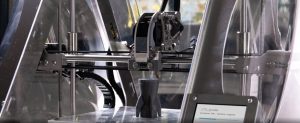
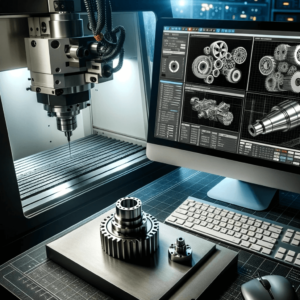
Computer-Aided Manufacturing (CAM), also known as Fabrication Assistée par Ordinateur (FAO), is a production method that leverages specialized software to design and control manufacturing processes. It finds extensive use in the precision mechanics industry for programming Computer Numerical Control (CNC) machines like milling machines, lathes, and electroerosion machines.
With the advent of CAM, the precision mechanics field has witnessed a revolution in terms of efficiency, accuracy, and versatility. CAM software has become an indispensable tool for manufacturers aiming to produce intricate components with the highest levels of precision.
The CAM Process Unveiled
The CAM process commences with the design of the workpiece in Computer-Aided Design (CAD) software. Subsequently, the software generates a machining program file, which is then transmitted to the CNC machine. This file contains all the necessary instructions to guide the machine during the machining process, including tool rotation speed, machine axis movement, and final piece dimensions.

One of the remarkable aspects of CAM is its ability to automate and streamline the manufacturing process. Traditional machining often required manual intervention and adjustments, leading to errors and inefficiencies. CAM, on the other hand, ensures that each step of the process is meticulously controlled and executed, minimizing human errors and optimizing production.
Advantages of CAM in Precision Manufacturing
CAM offers numerous advantages over traditional manufacturing methods. Firstly, it enables exceptional precision and high repeatability, which are paramount for producing high-quality components. The ability to program intricate toolpaths and optimize cutting parameters allows manufacturers to achieve tolerances that were once thought unattainable.
Moreover, CAM drastically reduces production lead times and manufacturing costs. By eliminating the time-consuming process of manual machine programming, manufacturers can respond more quickly to customer demands and market changes. This agility is a significant competitive advantage in today's fast-paced business environment.
CAM is highly versatile and can be applied to produce a wide variety of components, from simple shapes to intricate forms with fine details and tight tolerances. In industries like aerospace and medical device manufacturing, where precision is non-negotiable, CAM has become the backbone of production processes.
Furthermore, CAM software has evolved to include advanced simulation capabilities. Before a single chip is cut, manufacturers can simulate the entire machining process virtually. This not only helps in identifying potential errors but also optimizes toolpaths for maximum efficiency. The result is not only reduced waste but also increased profitability.
Applications Beyond Precision Mechanics
While CAM is a cornerstone of precision mechanics, its applications extend well beyond this domain. Industries such as automotive, aerospace, healthcare, and even architecture benefit from the power of CAM. In the automotive sector, CAM is used to manufacture engine components with intricate geometries, leading to better fuel efficiency and performance.
Aerospace companies rely on CAM to produce complex aircraft parts that meet strict safety and quality standards. In healthcare, CAM is employed to create custom medical implants and devices tailored to individual patients. Even architectural firms use CAM to fabricate intricate building components, pushing the boundaries of design and construction.
In Conclusion
In conclusion, Computer-Aided Manufacturing (CAM) has ushered in a new era of precision and efficiency in the field of precision mechanics and manufacturing. Its ability to automate complex processes, ensure high precision, reduce production costs, and expand its applications to various industries makes it an indispensable tool in the modern manufacturing landscape.
Manufacturers who harness the power of CAM gain a competitive edge by delivering superior quality products in less time. As technology continues to advance, CAM is poised to play an even more significant role in shaping the future of manufacturing across multiple sectors.